

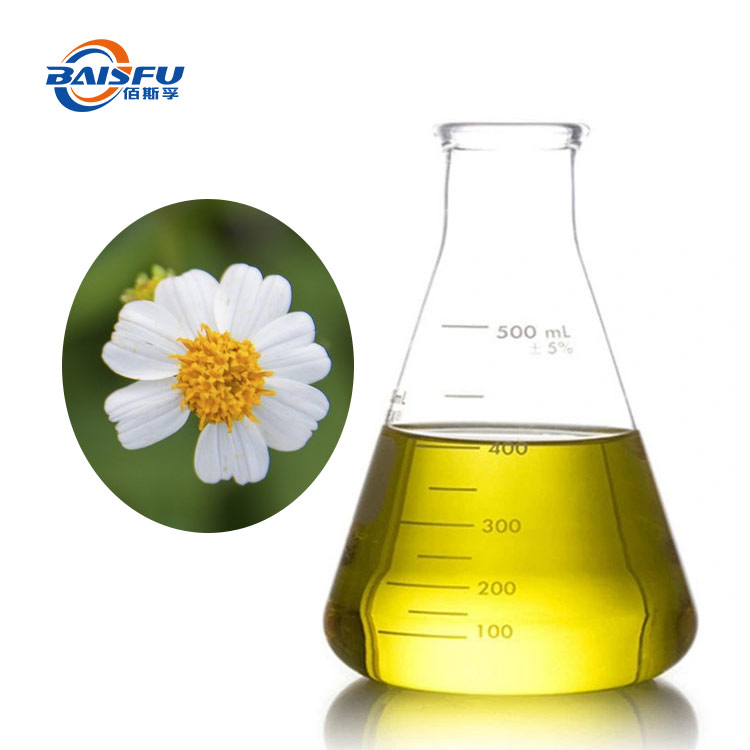
25% Pyrethrin Liquid CAS: 8003-34-7 Used to Control
Short Description:
Pyrethrin 25% CAS: 8003-34-7 Pyrethrin is a high economic value and ornamental value of Compositae plants, its roots, stems, leaves, flowers and so on contain pest qualities, can be used to extract pyrethrin raw materials, used to prepare a variety of insecticides, kill aphids, mosquitoes, flies, rapeseed, cotton bolls and other pests.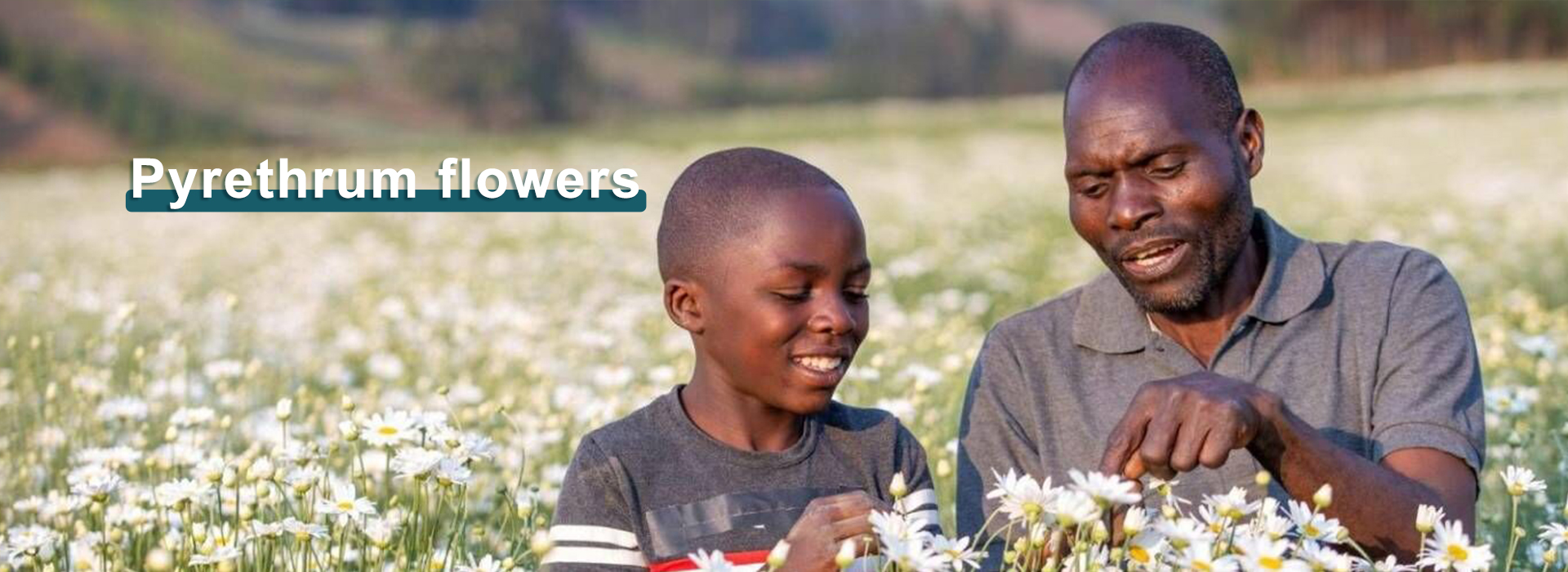
Product Description
25% Pyrethrin Liquid CAS: 8003-34-7 Used to control pests on crops, fruits, and vegetables
Pyrethrum was a genus of several Old World plants now classified in either Chrysanthemum or Tanacetum which are cultivated as ornamentals for their showy flower heads. Pyrethrum continues to be used as a common name for plants formerly included in the genus Pyrethrum. Pyrethrum is also the name of a natural made from the dried flower heads of Chrysanthemum cinerariifolium and Chrysanthemum coccineum. The insecticidal compounds present in these species are pyrethrins.
Products Description --25% Pyrethrin CAS: 8003-34-7 Liquid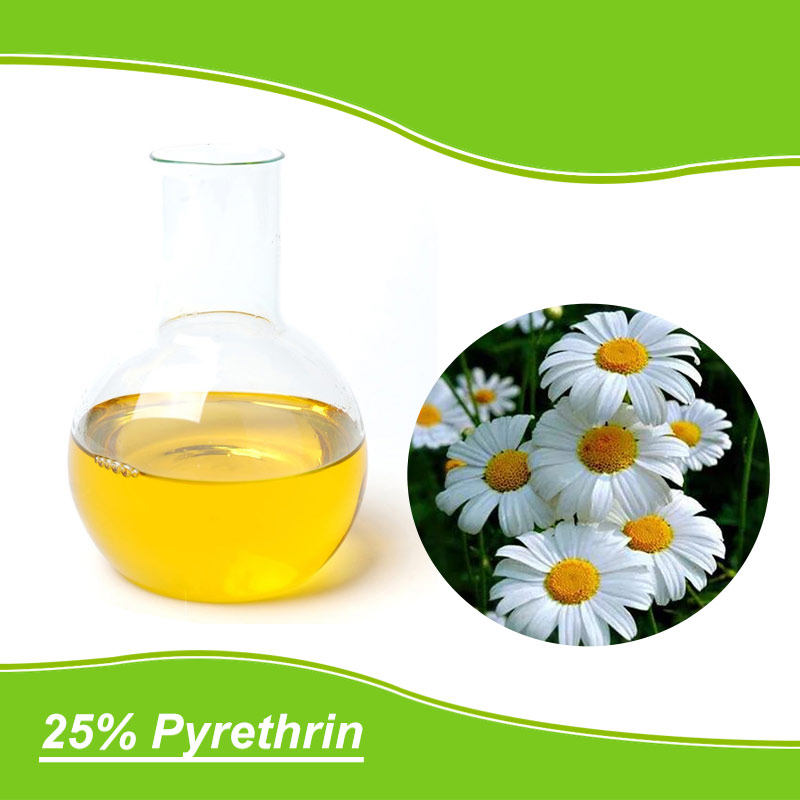
25% Pyrethrin Liquid is a concentrated formulation of pyrethrin, a natural insecticide derived from chrysanthemum flowers. Pyrethrins are widely used in agricultural, horticultural, and household pest control due to their effectiveness against a broad range of insects.
Active Ingredient: Pyrethrins (50% concentration).
Appearance: Pale yellow to dark greenish brown viscous liquid.
Odor: Characteristic floral or spicy odor.
Solubility: Insoluble in water; soluble in organic solvents like ethanol and acetone.
Density: 0.84-0.86 g/cm³.
Boiling Point: Varies by component (e.g., Pyrethrin I:338°F, Pyrethrin II: 392°F).
Flash Point: 75°C (flammable liquid).
Product Parameters
| Product Name | Natural Pyrethrum Extract 25% Pyrethrin |
| CAS NO. | 8003-34-7 |
| Molecular Formula | C43H56O8 |
| Specification | 50% |
| Botanical Source | Pyrethrum Cinerariifolium Trev |
| Storage Condition | Avoid light, Cool Dry Place |
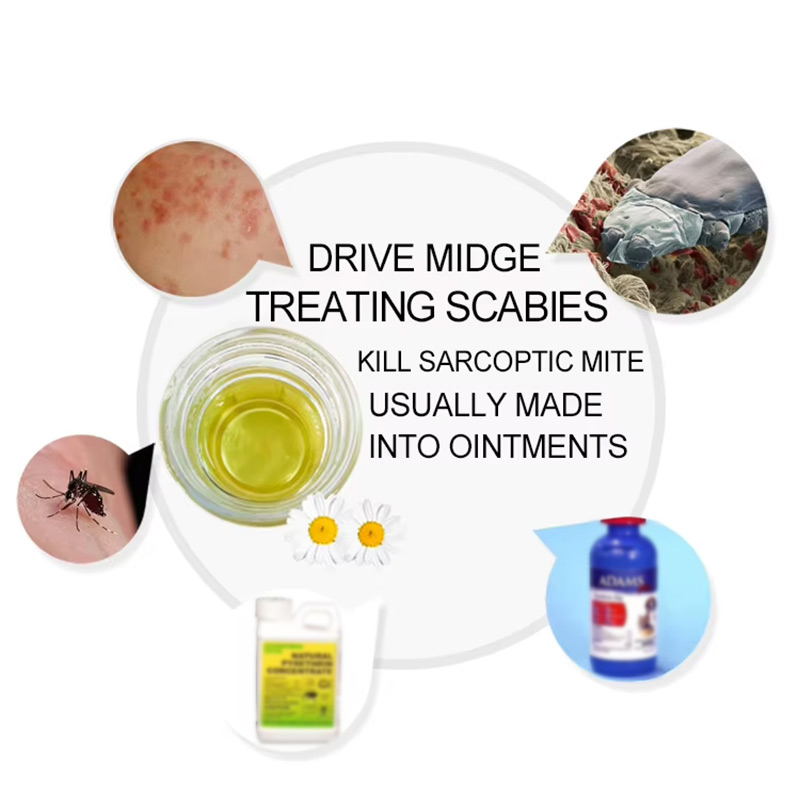
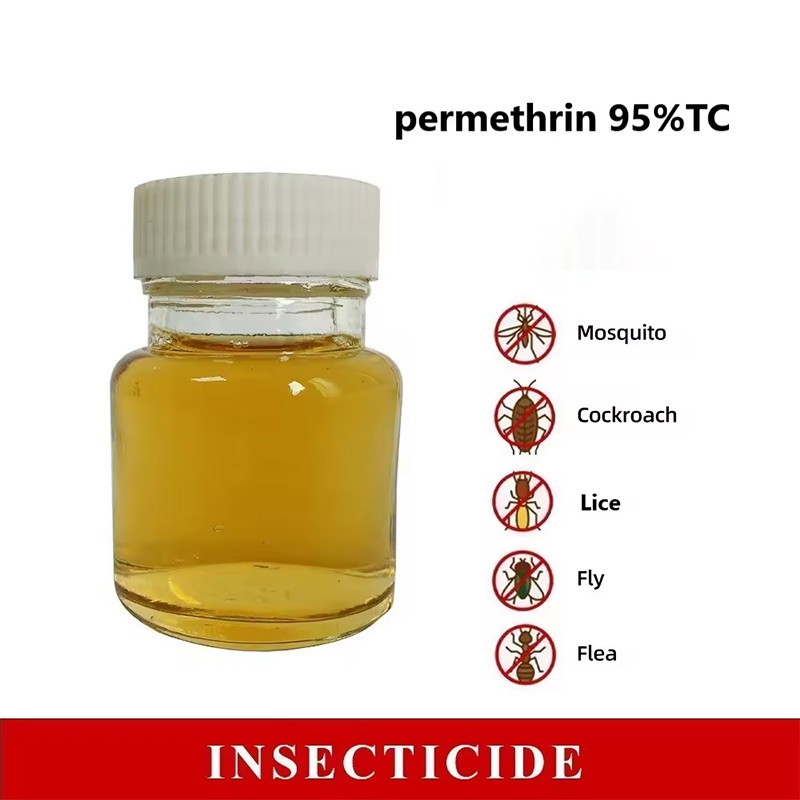
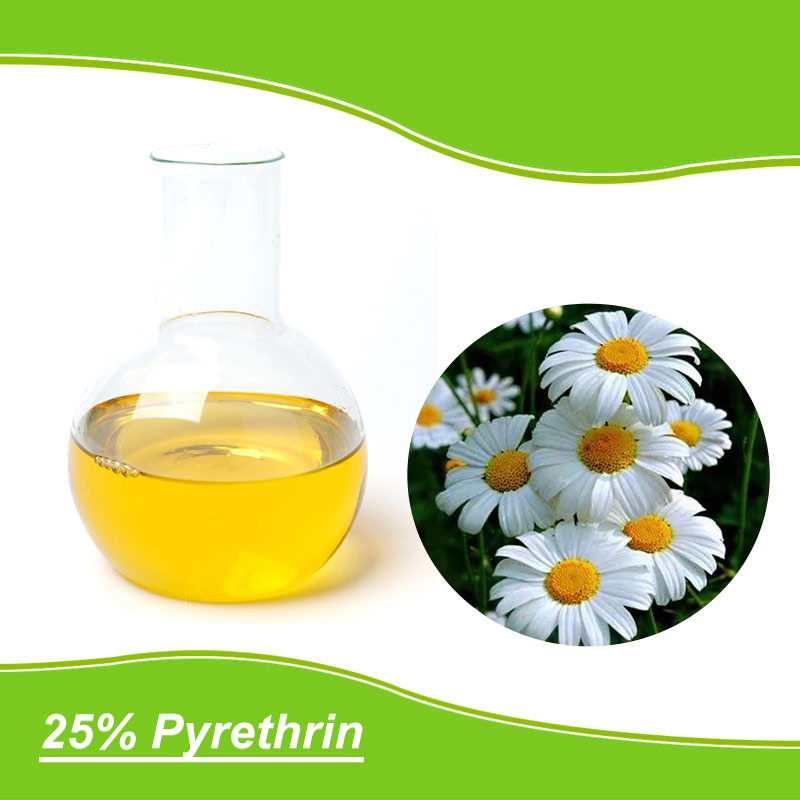
Key Features of 25% Pyrethrin Liquid
Concentration:
A 25% concentration is highly potent and typically requires dilution before use. It is often mixed with water or other carriers to achieve the desired application strength.
Applications:
Agriculture: Used to control pests on crops, fruits, and vegetables.
Livestock: Applied to manage flies, ticks, and other parasites on animals.
Household: Effective against mosquitoes, ants, cockroaches, and other indoor pests.
Public Health: Used in mosquito control programs to reduce disease transmission.
Advantages:
Biodegradable and environmentally friendly compared to synthetic pesticides.
Broad-spectrum insecticide effective against many pests.
HOT-SALE PRODUCT
Quality First, Safety Guaranteed
-

25% Pyrethrin Liquid CAS: 8003-34-7 Used to Control
-
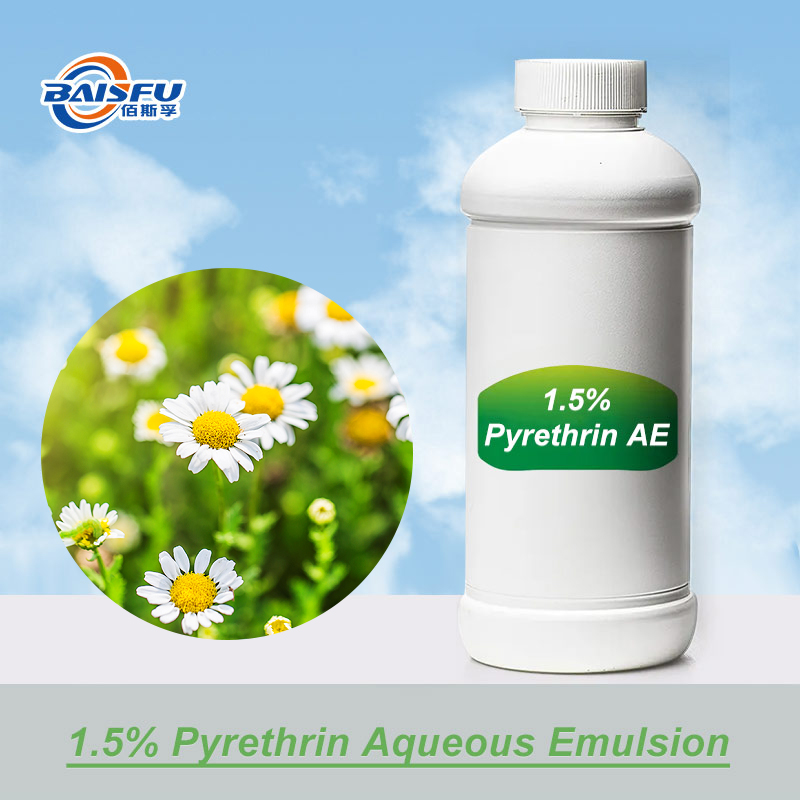
1.5% Pyrethrin Aqueous Emulsion Is a Formulation of Pyrethrin Used for Pest
-
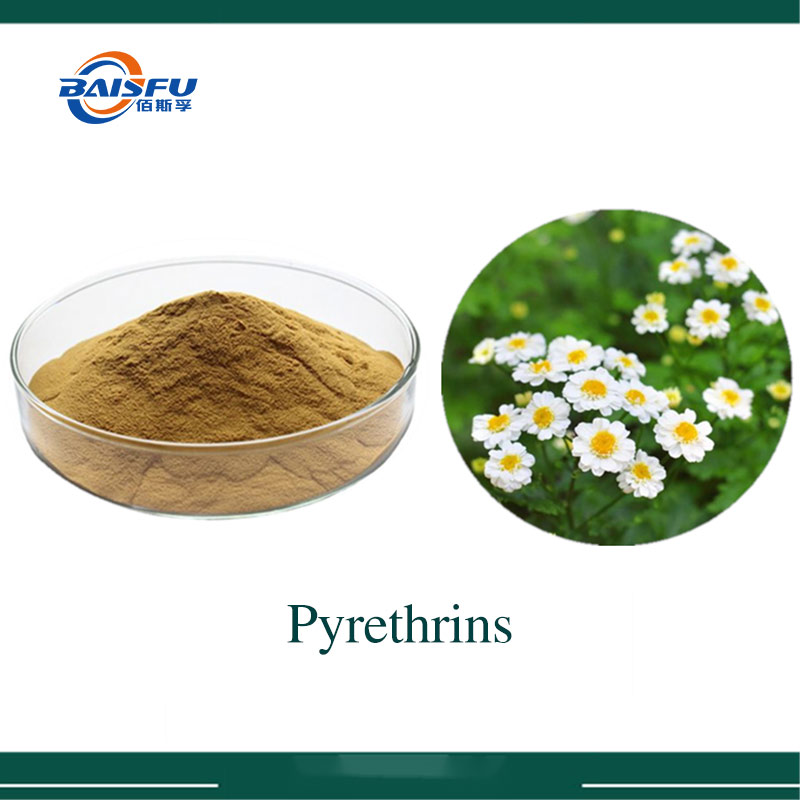
1% Pyrethrin Flavone Powder
-
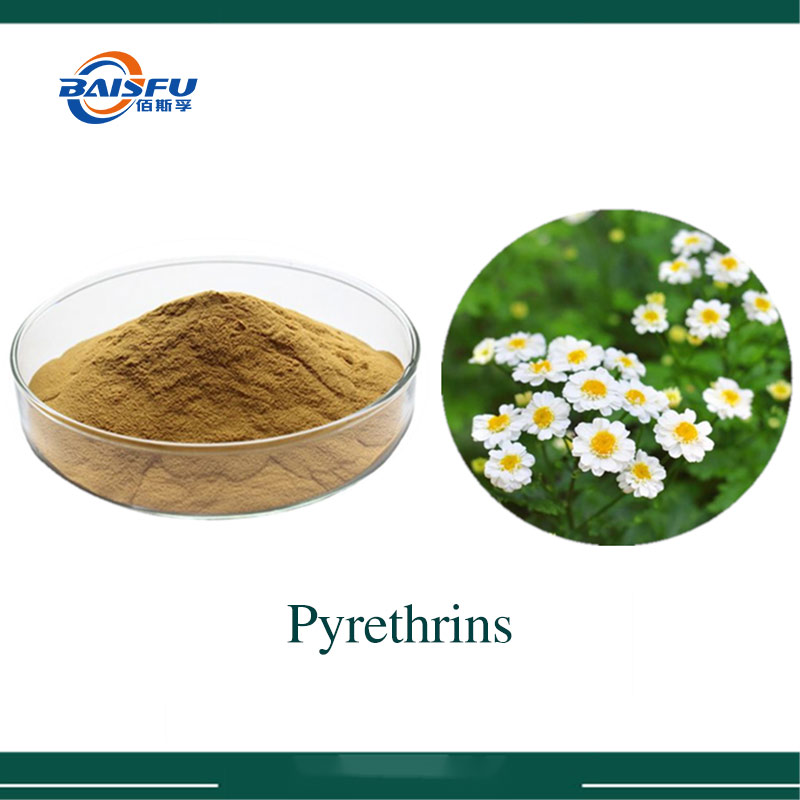
1% Pyrethrin powder Used to control a wide range of pests, including aphids, beetles, caterpillars Pyrethrum was a genus of several Old World plants now classified in either Chrysanthemum or Tanacetum which are cultivated as ornamentals for their showy f
-
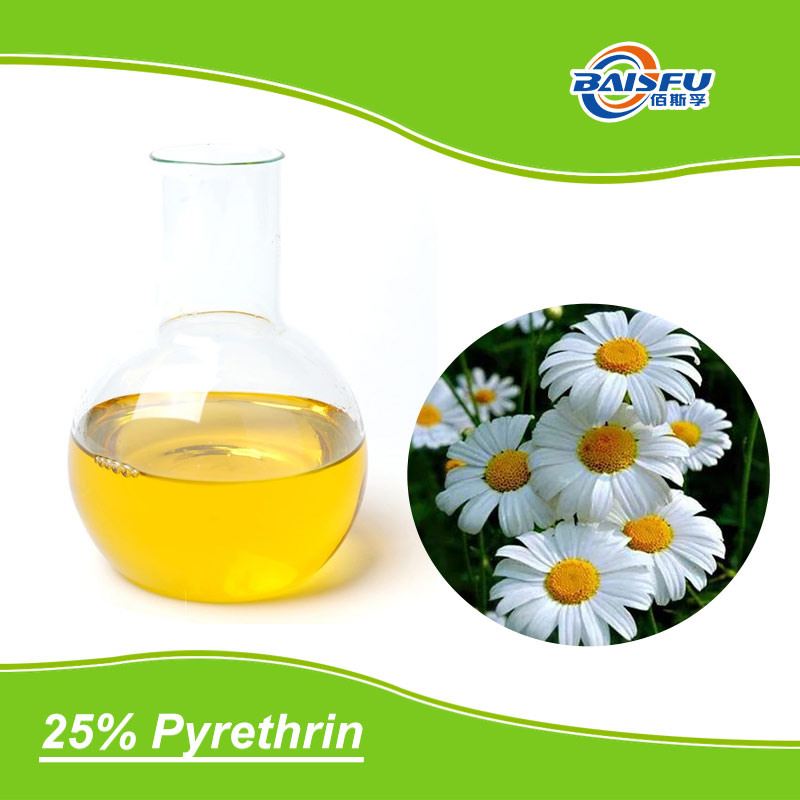
25% Pyrethrin Liquid CAS: 8003-34-7 Used to Control
-

25% Pyrethrin Liquid CAS: 8003-34-7 Used to Control
-

Phone
-

E-mail
-

Whatsapp
-

Top